Workers' Compensation Injury Trends: What Hawaiʻi Businesses Should Know
Reading Time: 2 – 3 Minutes
Key Takeaways
- Strains and sprains are the top reported cause of injury between 2024 - 2026. To aid in prevention, train employees on proper lifting techniques and rotate physically demanding tasks to reduce repetitive motion injuries.
- Workers' compensation injury trends are worth paying attention to because they tend to repeat.
- Work to understand which injury types are most common in a given year to allocate your safety efforts accordingly.
- Businesses can reach out to their insurance agent to ask about the availability of risk control services.
Disclaimer: The information in this article is intended for general informational purposes only and does not constitute legal, safety, or professional advice. Island Insurance makes no guarantees regarding specific outcomes, including the prevention of workplace injuries or changes to insurance premiums. Businesses should consult qualified safety and legal professionals when developing risk management programs.
As a Hawaiʻi-based insurance carrier, Island Insurance works closely with local businesses across a range of industries. Through that work, our Risk Control team has observed consistent patterns in the types of workplace injuries that drive workers' compensation claims. Here are the trends we have seen, so you know what to look out for, and what your business can do now to help prevent these common injuries.
Struck By / Against refers to injuries that occur when a worker is hit by a moving object, such as a falling tool, flying debris, or a moving vehicle, or when a worker moves into a stationary object, like walking into the corner of a shelf or bumping into equipment.
Caught In Between refers to injuries that occur when part of a worker's body is caught, squeezed, pinched, or crushed between two objects. This can happen with machinery, equipment, or moving parts. For example, a hand caught between a conveyor belt and a roller, or a worker caught between a vehicle and a fixed structure.
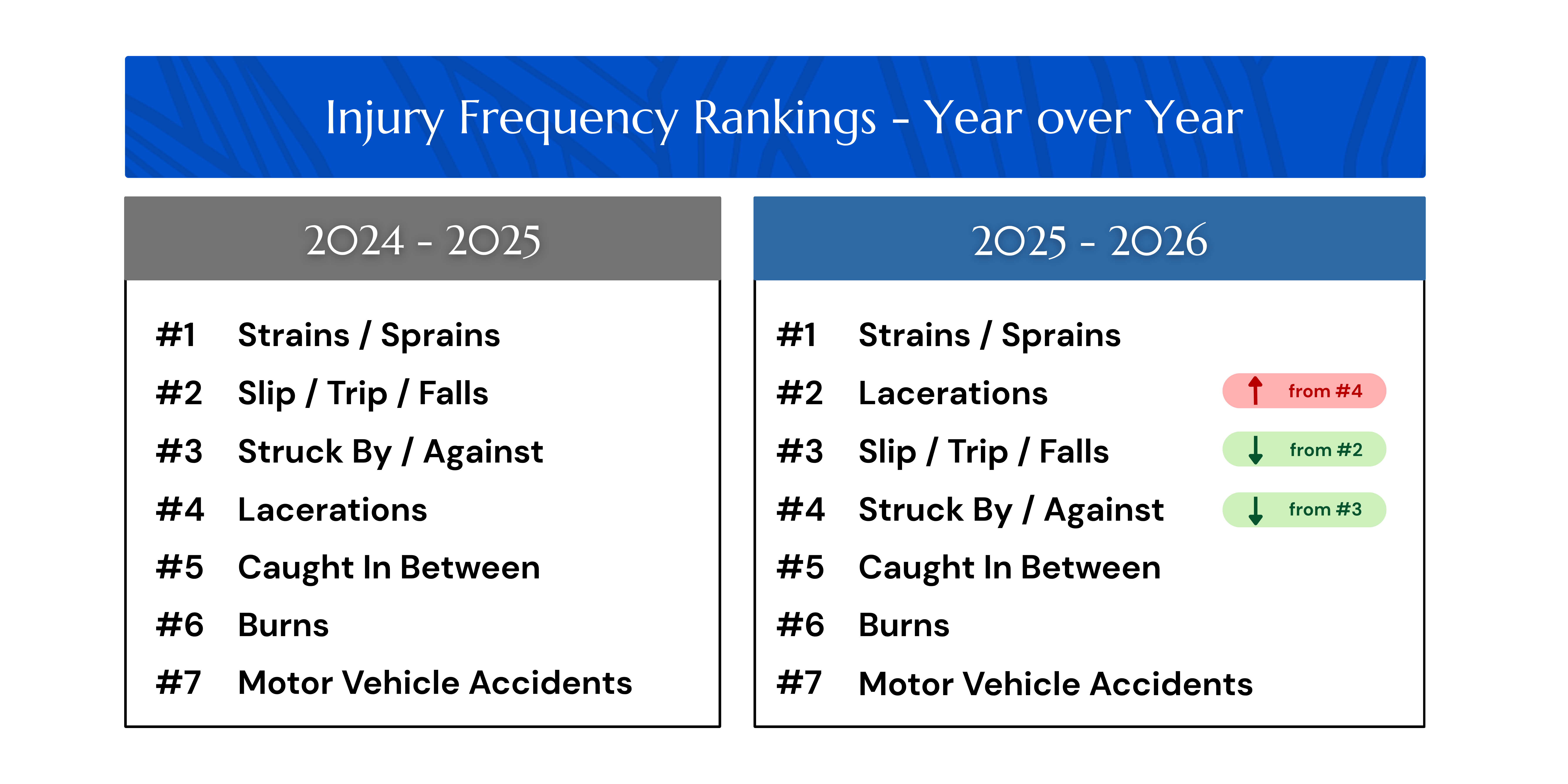
Strains and sprains have held the top spot among frequency leaders for two consecutive years. Slip, trip, and fall injuries have remained a top three concern year after year. The most notable shift in our recent observations is the rise of lacerations, which moved from #4 to #2, pointing to an increase in cut and puncture injuries across industries here in Hawaiʻi.
These trends are worth paying attention to because they tend to repeat. Understanding which injury types are most common in a given year can help businesses focus their safety efforts where they are likely to matter most.
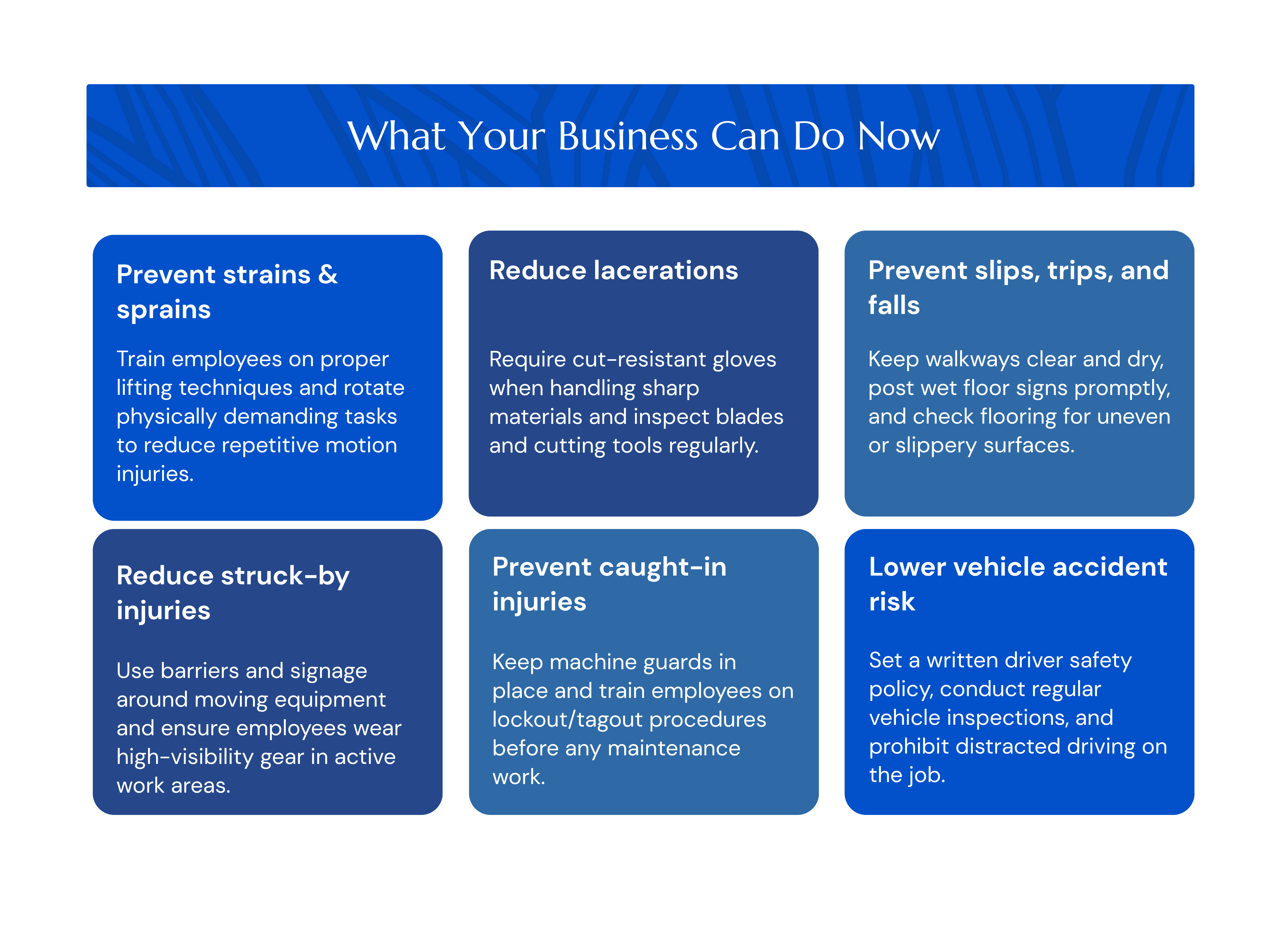
The data above reflects what our risk control team has observed working with Hawaiʻi businesses over time. Businesses interested in learning more about these trends or how to address them in their own operations can reach out to their insurance agent to ask about risk control services.


Related Articles