After the Storm: Being Aware of Common Contractor Scams in Hawai′i
Reading Time: 3 – 4 Minutes
Key Takeaways
Overly aggressive or fraudulent contractors actively target disaster-affected areas, approaching stressed homeowners door-to-door, by phone, or online to offer fast repairs at suspiciously low prices.
Check any contractor's license, insurance, and complaint history through the Hawaiʻi DCCA at businesscheck.hawaii.gov before signing anything or handing over money.
Report property damage directly to your insurance agent rather than letting an unsolicited contractor submit or manage your claim. Doing so can expose you to insurance fraud liability.
Your insurer requires that you – not a third-party contractor – provide information when filing a claim. Vendors are not permitted to file on your behalf. Your insurer may discuss your damage and required repairs directly with your contractor but only after you provide your insurer with express permission to do so.
After a hurricane, flood, or other disaster, scammers move fast. It is important to be careful about who you allow to inspect your property or file claims on your behalf. Overly aggressive or fraudulent contractors, sometimes known as “storm chasers,” travel to disaster-affected areas looking for homeowners who are stressed and eager to get repairs done. Knowing what to look for can protect your property, your money, and your insurance claim.
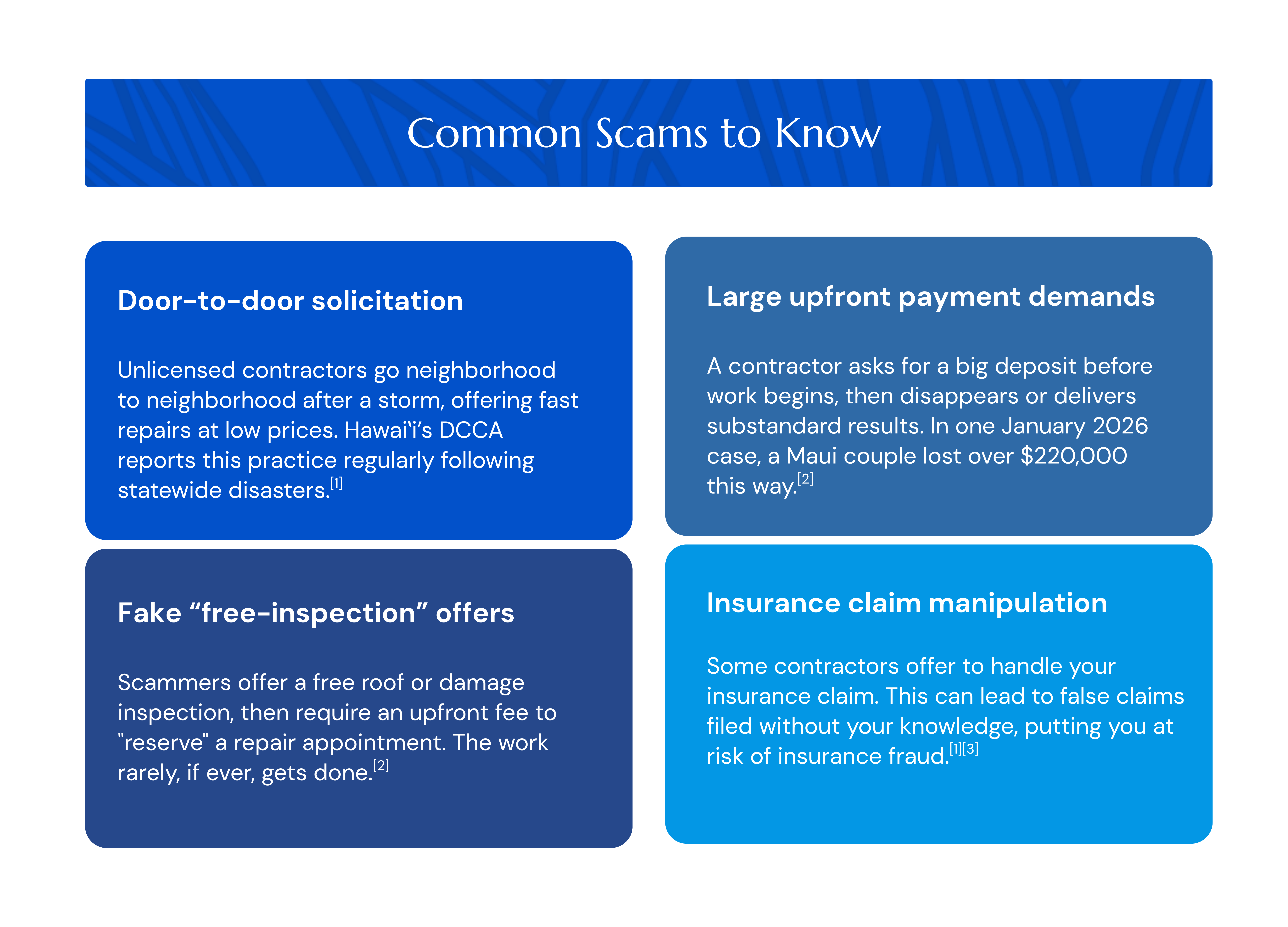
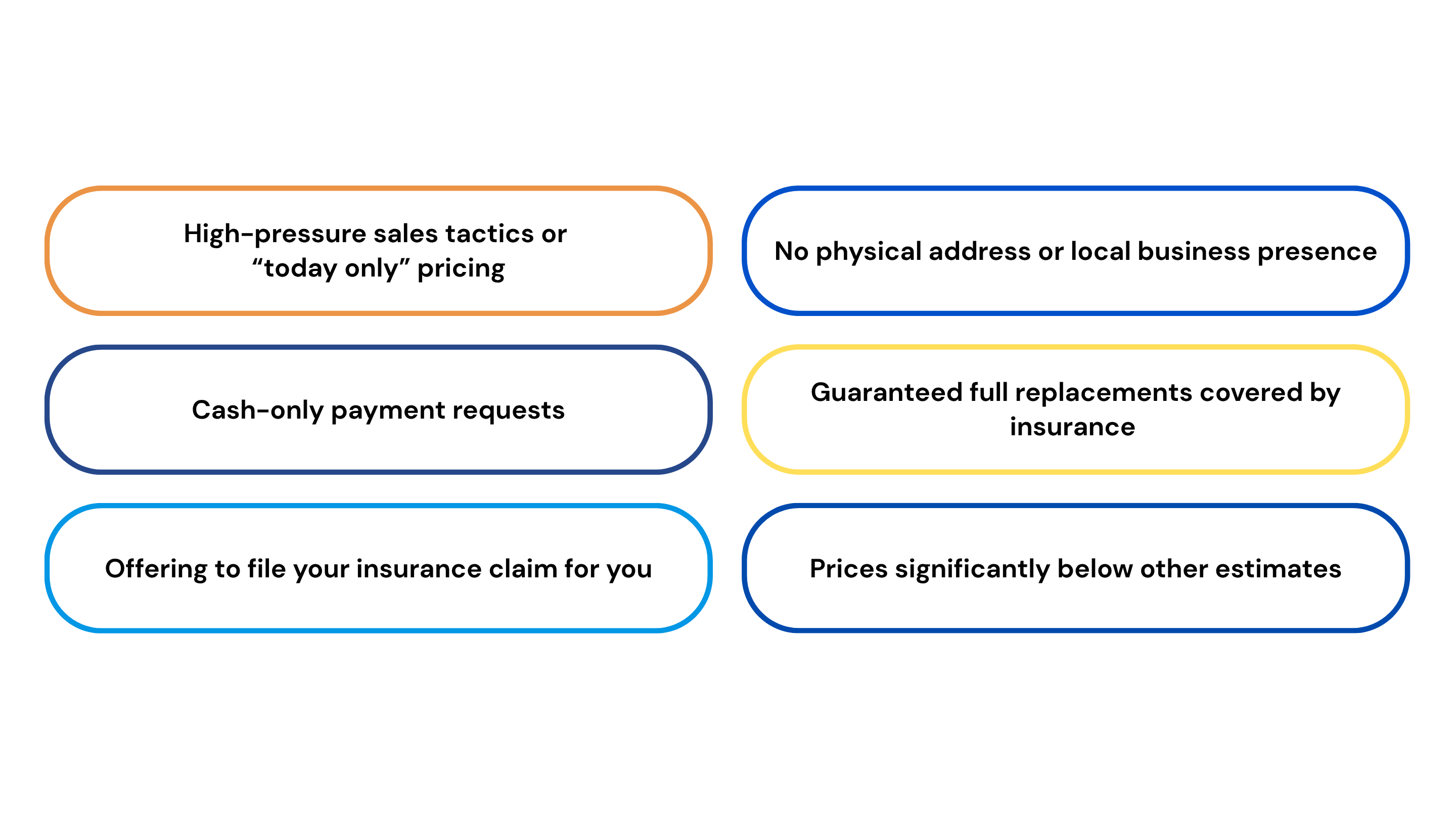
Take a little extra caution before signing anything. Watch out for these common red flags:
How to Verify a Contractor in Hawai‵i
Before hiring anyone for repairs, check if the contractor is licensed by the State of Hawaii. Licensed contractors are required to carry workers’ compensation and liability insurance. If the person you hire cannot provide proof that they carry this insurance, you may be responsible for any on-site injuries [1].
Check their license: Search the Hawai′i Department of Commerce and Consumer Affairs (DCCA) online tool for license status, insurance, and complaint history.
Get multiple written estimates: compare at least two or three bids before agreeing to anything. A dramatically low estimate is a warning sign [3].
Never pay the full amount upfront: Use a credit card when possible as it provides a paper trail and dispute options if something goes wrong [2]. Some roofing contractors include a provision in their contracts stating that if they are not hired for the job, they are owed a percentage of your insurance proceeds. Read any contract carefully before signing, and be cautious of pressure to sign on the spot without time to review.
Contact your insurance agent first: Report damage directly to your insurance agent rather than letting an unsolicited third party file your claim or manage the process.
Verify their insurance: Ask for proof of workers’ compensation and liability insurance coverage before work begins [1].
How to Report a Scam
If you suspect a scam, report it to the Hawaiʻi’s DCCA/RICO (cca.hawaii.gov/rico/file) or by calling 1-844-808-3222. You can also call the free FEMA Disaster Fraud Hotline at 1-866-720-5721.
Have questions about your insurance policy? Contact your local insurance agent.
Frequently Asked Questions
Check their license, insurance, and complaint history at businesscheck.hawaii.gov before hiring.
Report it to Hawaiʻi's DCCA/RICO at cca.hawaii.gov/rico/file or call 1-844-808-3222.
No. Always report damage directly to your insurance agent or company.
Sources:
Hawaiʻi Governor’s Office / DCCA. Public Urged to Be Vigilant Against Contractor Fraud Following Statewide Disaster. April 2026. RELEASE: PUBLIC URGED TO BE VIGILANT AGAINST CONTRACTOR FRAUD FOLLOWING STATEWIDE DISASTER | Governor Josh Green, M.D.
Hawaiʻi News Now / Better Business Bureau. Hawaiʻi Residents Warned of Contractor Scams Ahead of Approaching Storm. April 2026. Hawaii residents warned of contractor scams ahead of approaching storm | Hawaii News Now
FEMA. Maui Wildfire Survivors Should Beware of Contractor Fraud as They Rebuild. June 2025. https://www.fema.gov/press-release/20250630/maui-wildfire-survivors-should-beware-contractor-fraud-they-rebuild


Related Articles