Essential Exterior Maintenance for Hawaiʻi Homeowners
Reading Time: 2 - 3 Minutes
Key Takeaways
Visible signs of deferred maintenance can affect your ability to obtain or keep homeowners insurance coverage.
Overhanging or dead branches and clogged gutters are among the most common and preventable sources of home damage in Hawaiʻi.
Keeping plants 12–18 inches from your exterior walls helps prevent moisture buildup, wood rot, and mold that can raise red flags during a property inspection.
Hurricane season runs June 1 through November 30, so securing outdoor items and reviewing your storm plan early means you won't be caught unprepared when warnings are issued.
Consistent, documented maintenance — including a monthly property walk and twice-yearly inspections — is your best tool for staying insurable and avoiding costly repairs.
Disclaimer: The information in this article is intended for general informational purposes only and does not constitute legal, safety, or professional advice. Island Insurance makes no guarantees regarding specific outcomes, including the prevention of workplace injuries or changes to insurance premiums.
A well-maintained home is easier to insure and less expensive to repair. Hawai‘i’s rain, salt air, intense sun, and other unique weather patterns can all work against your home's exterior year-round. A simple maintenance routine keeps your home in good condition and helps ensure you remain eligible for homeowners coverage when it matters most.
What Insurance Carriers Look For
Insurability refers to how acceptable a person, property, or risk is to an insurance company. It describes whether an insurance company is willing to provide coverage based on the likelihood of a loss occurring and the potential cost of that loss. Understanding insurability is important because it directly affects access to insurance coverage, cost, and protection options.
Insurance is designed to cover sudden, unexpected damage, not damage that builds up over time from neglect or wear and tear. Insurers evaluate the condition of your property, and visible signs of deferred maintenance can affect your ability to obtain or maintain coverage. Staying current with upkeep is one of the most direct ways to protect your insurability. Contact your insurance agent directly with any coverage questions.
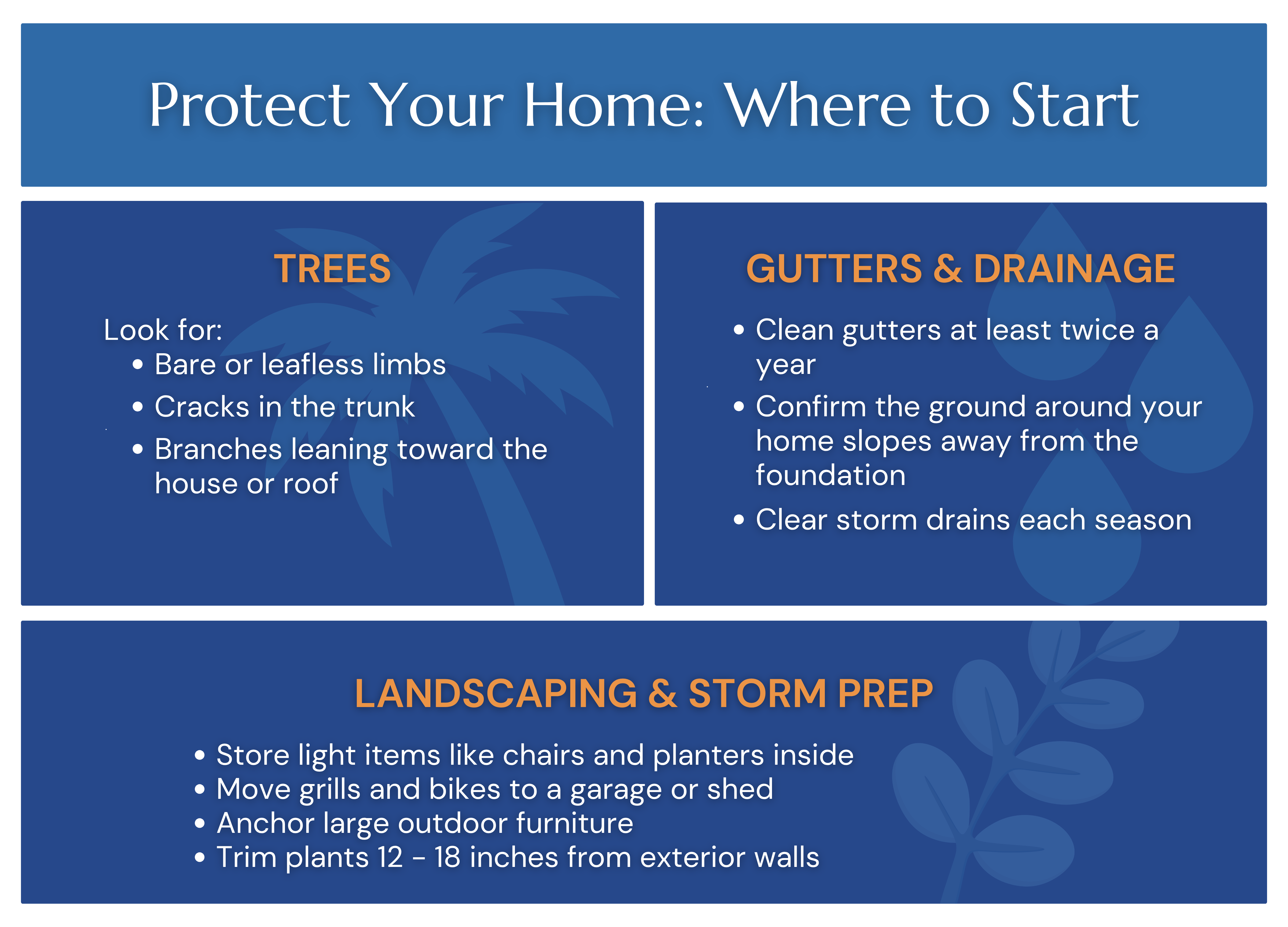
The condition of your yard and trees is one of the first things an insurer notices.
Trees
Overhanging or dead branches are one of the most common sources of preventable home damage. Every few months, walk your yard and look for: [1]
Bare or leafless limbs
Cracks in the trunk
Branches leaning toward the house or roof
Keep limbs at least 10 feet from your roof. For large trees or anything near power lines, hire a licensed arborist. Regular trimming costs far less than storm repairs and demonstrates the kind of proactive care insurers look for.
Gutters and Drainage
Water damage from clogged or poorly maintained gutters is one of the most preventable sources of home damage in Hawai‘i. To protect your foundation and your coverage: [1]
Clean gutters at least twice a year
Make sure downspouts direct water at least five feet from your foundation
Confirm the ground around your home slopes away from the foundation
Clear storm drains each season
The same principle applies to everything touching your exterior walls and yard.
Landscaping and Storm Prep
Trim plants 12 to 18 inches from your exterior walls to improve air circulation and prevent moisture buildup, wood rot, and mold. These are conditions that can raise red flags during a property inspection.
Before hurricane season (June 1 through November 30), secure anything that could shift in strong winds: [2, 3]
Store light items like chairs and planters inside
Move grills and bikes to a garage or shed
Anchor large outdoor furniture
Your Maintenance Schedule
Consistent, documented maintenance is your best tool for staying insurable and prepared. Keep receipts and records of all professional work.
Monthly: A quick 15-minute property walk catches small problems before they grow [4]
Twice a year: Clean gutters, trim plants, inspect your roof and foundation [1]
Each season: Clear storm drains, restock emergency supplies, and review your storm plan [2, 3]
For major tree work, foundation repairs, or roof work, always hire a licensed contractor. A well-maintained home is easier to insure, less expensive to repair, and better prepared for whatever Hawai‘i's climate brings.
Frequently Asked Questions
Because insurance is designed to cover sudden, unexpected damage rather than gradual damage from neglect, visible signs of deferred maintenance can affect your ability to obtain or keep homeowners coverage.
Keep tree limbs at least 10 feet from your roof and plants 12–18 inches from your exterior walls to prevent moisture buildup, wood rot, and mold.
Clean your gutters at least twice a year, and make sure downspouts direct water at least five feet from your foundation.
Hurricane season runs June 1 through November 30, so before it begins, store or secure outdoor items like chairs, planters, and grills, anchor large furniture, restock emergency supplies, and review your storm plan.
A consistent routine includes a 15-minute property walk each month, a twice-yearly check of your gutters, plants, roof, and foundation, and seasonal tasks like clearing storm drains and reviewing your storm plan, with receipts kept for all professional work.
Sources
University of Hawaii at Hilo. Protecting Your Home. https://hilo.hawaii.edu/natural-hazards/hurricanes/protectinghome.php
National Hurricane Center, NOAA. Hurricane Preparedness Guide. https://www.nhc.noaa.gov/prepare/ready.php
National Weather Service Honolulu. Hurricane Preparedness Week in Hawaii: Prepare Before Hurricane Season. 2024. https://www.weather.gov/hfo/HPW2024mon
University of Hawaii Sea Grant College Program. Homeowner's Handbook to Prepare for Natural Hazards. 4th ed. 2025. https://seagrant.soest.hawaii.edu/hazard-and-hurricane-preparedness/


Related Articles