The Rise of AI-Powered Insurance Scams: How Technology is Changing the Face of Fraud
Reading Time: 2–3 Minutes
Key Takeaways
AI-driven scams now account for more than half of all digital financial fraud.
Synthetic voice fraud attacks on insurance companies increased 475% in 2024.
Common AI scams include deepfake videos, voice cloning, and fake documents.
You can reduce your risk by verifying identities and staying cautious with digital communications.
Disclaimer: The examples in this article are hypothetical and for educational purposes only. All scenarios, names, and dollar amounts are fictitious. Consult a licensed insurance professional for advice specific to your situation.
Imagine getting a video call from someone who looks and sounds exactly like your insurance agent. They say your coverage will lapse unless you make a payment right now. The call feels urgent but completely legitimate. You provide your information. Days later, you find out your real agent never called. The person on that screen was an AI-generated deepfake – a video created by AI of something that does not exist or of an event that has never occurred – and your money is gone.
This is not a distant threat. It is happening to consumers across the country right now.
How Big Is the Problem?
Generative AI fraud losses in the United States are projected to reach $40 billion by 2027, up from $12.3 billion in 2023 [1]. Synthetic voice fraud attacks on insurers rose 475% in 2024 alone [2]. What makes these scams dangerous is how convincing they are. AI can now create realistic voices, videos, and documents that are difficult to tell apart from the real thing.
The Most Common Scams
Voice cloning uses a few seconds of audio pulled from social media or voicemails to replicate someone's voice. Scammers then call posing as your agent, claiming your policy is at risk unless you act immediately [3].
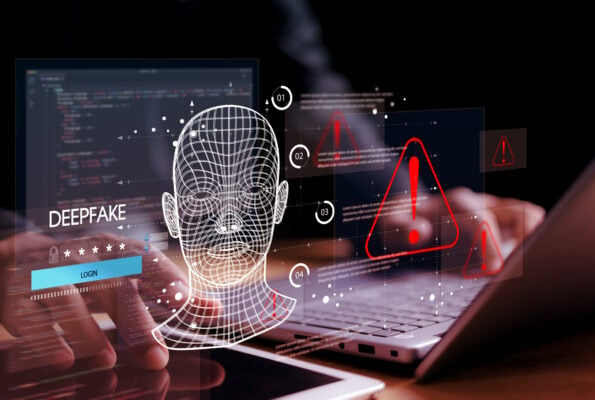
Deepfake video calls take it further, generating a realistic video of a fake representative requesting payment or personal information on the spot.
Fake documents produced by AI can look nearly identical to real insurance policies, ID cards, and official letters, sometimes convincing consumers they have coverage they do not actually have.
AI phishing emails are no longer full of obvious errors. They are well-written, reference specific policy details, and include urgent requests to click a link or confirm payment [4].
Warning Signs
Urgent pressure to pay or share information without time to verify.
Video calls where facial movements look slightly off or lip movements do not match the words.
Phone calls with odd pauses or a slight robotic tone.
Documents that look unusually perfect.
Requests to move the conversation away from official channels.
How to Protect Yourself
If someone claiming to be from your insurance company contacts you asking for money or personal information, hang up. Then call the number on your policy documents or the company's official website. Do not use contact information from suspicious messages.
Turn on two-factor authentication for your financial accounts, use unique passwords, and keep your devices updated. On social media, limit public videos that clearly show your face and voice, since scammers use this content to build deepfakes.
Most importantly, do not let urgency override caution. Legitimate insurers will give you time to verify. If something feels wrong, trust that instinct.
Why It Matters to Everyone
Insurance fraud raises costs for all policyholders. When insurers absorb fraud losses, those costs come back through higher premiums [5]. Staying alert protects not just you, but everyone you share a policy with.
If you believe you have been targeted, contact your insurance agent using a verified number and report the incident to your state insurance commissioner and the Federal Trade Commission.
Frequently Asked Questions
AI-powered insurance scams use artificial intelligence to impersonate insurance agents, create fake policy documents, or generate realistic phone calls and video calls. Common tactics include voice cloning, deepfake video calls, fake documents, and AI phishing emails.
Watch for video calls where facial movements look slightly off, or lip movements do not match the words. On phone calls, listen for odd pauses or a slight robotic tone. Any urgent request for payment or personal information without time to verify is a red flag.
Hang up. Then call the number on your policy documents or the company's official website. Do not use contact information from suspicious messages. Report the incident to your state insurance commissioner and the Federal Trade Commission.
Generative AI fraud losses in the United States are projected to reach $40 billion by 2027, up from $12.3 billion in 2023. Synthetic voice fraud attacks on insurers rose 475% in 2024 alone.
Yes. When insurers absorb fraud losses, those costs come back through higher premiums. Staying alert protects not just you, but everyone you share a policy with.
Sources
Deloitte Center for Financial Services. Deepfake Banking and AI Fraud Risk. Deloitte; June 2024. Accessed January 21, 2026. https://www.deloitte.com/us/en/insights/industry/financial-services/deepfake-banking-fraud-risk-on-the-rise.html
Pindrop. 2025 Voice Intelligence and Security Report. Pindrop; 2025. Accessed January 21, 2026. https://www.pindrop.com/research/report/voice-intelligence-security-report/
Federal Trade Commission. Scammers Use AI to Enhance Their Family Emergency Schemes. FTC; March 2023. Accessed January 21, 2026. https://consumer.ftc.gov/consumer-alerts/2023/03/scammers-use-ai-enhance-their-family-emergency-schemes
Norton. 2025 Norton Cyber Safety Insights Report. NortonLifeLock; 2025. Accessed January 21, 2026. https://www.nortonlifelock.com/us/en/newsroom/press-kits/2025-norton-cyber-safety-insights-report/
Deloitte. 2025 Insurance Outlook. Deloitte; 2025. Accessed January 21, 2026. https://www2.deloitte.com/us/en/insights/industry/financial-services/financial-services-industry-outlooks/insurance-industry-outlook.html


Related Articles