Simple Electrical Upgrades That Make Your Home Safer and More Insurable
Reading Time: 4 – 5 minutes
Key Takeaways
Electrical fires happen more often than you think: In the U.S., faulty wiring causes thousands of residential fires each year, leading to hundreds of deaths and billions in property damage.
Old wiring creates insurance challenges: Insurance companies may be reluctant to insure homes with outdated systems like knob and tube wiring.
Some electrical panels are dangerous: Federal Pacific Electric (FPE) and Zinsco panels have known safety problems and should be replaced.
Safety devices may save lives: GFCIs and AFCIs may prevent electrocution and fires in key areas of your home.
Updates protect your family and your wallet: Modern electrical systems reduce risk and can improve your insurance options.
When was the last time you thought about the wiring behind your walls? If you're like most homeowners, the answer is probably "never," until something goes wrong.
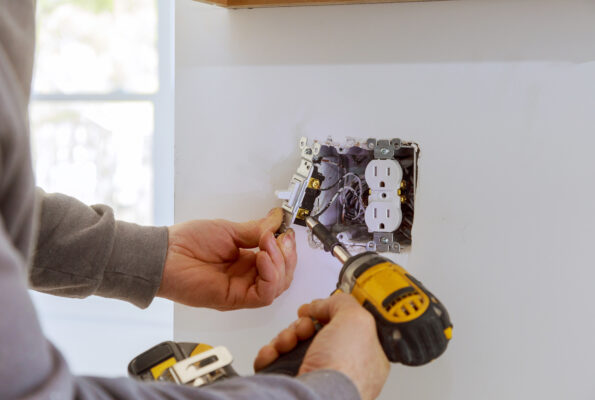
That hidden electrical system does more than keep your lights on. It directly affects your home's safety and may impact the availability and cost of your insurance options [1]. A licensed electrician can spot and fix electrical hazards before they turn into fires.
Ground Fault Circuit Interrupters (GFCIs)
You know those outlets in your bathroom with the "test" and "reset" buttons? Those are GFCIs. They shut off power in milliseconds when they detect a problem, preventing electrocution. Think of them as ultra-fast safety switches that protect you from getting shocked.
You are required to have GFCIs in areas near water: bathrooms, kitchens (within 6 feet of sinks), outdoors, garages, basements, and crawl spaces.
Arc Fault Circuit Interrupters (AFCIs)
AFCIs detect dangerous electrical arcs (sparks that can start fires) and will cut power automatically. They work like smoke detectors for your electrical system. Current building codes require them in bedrooms, living rooms, dining rooms, family rooms, hallways, closets, kitchens, and laundry areas.
Proper Grounding
Two-prong outlets are a red flag. They signal outdated electrical systems without proper grounding. Three-prong outlets include a ground wire that gives stray electricity a safe path away from you and your appliances. An electrician can test whether your outlets are properly grounded.
Understanding Your Electrical System
Circuit breakers used in electrical panels are an important safety measure in your electrical system, however, some circuit breaker brands have been found to be dangerous and prone to failure. Consider having your electrical panel inspected by an electrician to certify that your circuit breakers are safe and up to current standards.
Wiring Types: What's in Your Walls?
Copper: The gold standard for electrical wiring. Durable, efficient, and preferred by everyone in the industry.
Knob and Tube: Found in pre-1950 homes, this ceramic-supported wiring breaks down over time. The rubber insulation crumbles like old newspaper, exposing bare wires. Insurance companies may not offer standard policies on homes with knob and tube wiring and recommend replacement
Aluminum: Popular from 1960 to 1980, aluminum wiring corrodes faster than copper. It also expands and contracts with temperature, like a jar lid that loosens when it heats up and cools down. This creates loose connections and fire hazards [1]. Some carriers will not insure homes with aluminum wiring or charge higher premiums.
Special Considerations for Hawai'i Homes
The state's humid, salt-filled air corrodes electrical components faster than in other states. Coastal homes face the highest risk. Electricians here recommend more frequent inspections than the typical mainland schedule.
How to Protect Your Home
Schedule electrical inspections every 3 to 5 years (more often if you live near the coast).
Replace knob and tube or aluminum wiring with copper.
Install GFCI and AFCI protection where required.
Remove FPE or Zinsco panels and install code-compliant replacements [2, 3].
Upgrade fuse boxes to circuit breaker panels.
Warning Signs: When to Call an Electrician
Contact a licensed electrician immediately if you notice:
Flickering or dimming lights
Warm outlets or switches
Discolored outlet covers or switch plates
Circuit breakers that trip repeatedly
Burning smells near outlets or the electrical panel
Sparks when plugging in or unplugging devices
Documenting Your Electrical Work
Keep records of all electrical work: receipts from licensed electricians, copies of permits and inspection reports, before and after photos, and maintenance logs. Share this documentation with your insurance agent. Some carriers may offer discounts for homes with updated electrical systems.
What Your Insurance Covers
Standard homeowners policies typically cover electrical damage from lightning strikes, fires, or severe weather. They generally don't cover damage from normal wear and tear, skipped maintenance, or pre-existing problems.
Homes with FPE or Zinsco panels may face challenges with insurance availability, coverage limitations or policy cancellations. Replacing these panels solves both the safety problem and the insurance issue.
What You Can Do Now
If you have concerns about your electrical system, schedule a professional inspection. A licensed electrician can assess your home, prioritize necessary updates, and provide cost estimates. Taking care of electrical issues protects your family and helps your chances to maintain your insurance coverage.
Disclaimer: This article provides general educational information only and should not be considered professional advice or a recommendation for specific coverage. Insurance needs vary based on individual circumstances. Readers should consult with qualified insurance professionals for personalized guidance. This content does not constitute an offer to sell insurance or guarantee coverage availability.
Frequently Asked Questions
Schedule electrical inspections every 3 to 5 years (more often if you live near the coast).
Knob and tube wiring and aluminum wiring should be replaced with copper.
GFCIs are required in bathrooms, kitchens (within 6 feet of sinks), outdoors, garages, basements, and crawl spaces.
Federal Pacific Electric (FPE) and Zinsco panels have known safety problems and should be replaced.
Insurance typically covers damage from lightning strikes, fires, or severe weather, but not normal wear and tear or skipped maintenance.
Sources
U.S. Fire Administration. Residential building electrical malfunction fire trends (2014-2023). Published 2023. Accessed December 22, 2025. https://www.usfa.fema.gov/statistics/residential-fires/electrical.html
U.S. Consumer Product Safety Commission. Calibration and condition tests of molded case circuit breakers, final report: Contract CPSC-C-81-1429. December 30, 1982.
U.S. Consumer Product Safety Commission. Commission closes investigation of FPE circuit breakers and provides safety information for consumers. News Release #83-008. March 3, 1983. Accessed December 22, 2025. https://www.cpsc.gov/Newsroom/News-Releases/1983/Commission-Closes-Investigation-Of-FPE-Circuit-Breakers-And-Provides-Safety-Information-For-Consumers


Related Articles