Understanding Plumbing Updates In Your Home: What Insurance Carriers Look For and Why It Matters
Reading Time: 5 - 7 Minutes
Key Takeaways
Regular plumbing maintenance can help reduce the risk of water damage claims.
Insurance covers sudden and accidental damage but does not cover gradual damage or neglect.
Water heaters typically last 5-15 years while cast iron and PVC pipes can last 25-40 years with proper maintenance.
Keeping records of inspections and repairs helps demonstrate proper property maintenance.
Properties 30 years or older should have periodic inspections by licensed plumbers.
Has your insurance company or insurance agent ever asked you questions about your property’s plumbing conditions? These questions aren't just for paperwork, they help assess your property's condition and potential water damage risk. Keeping records of your plumbing updates can support your coverage and demonstrate responsible property maintenance.
Why Plumbing Updates Matter
Water damage represents one of the most common and expensive types of property insurance claims. Improper plumbing control can lead to significant damage through piping failure or plumbing backups. When you update your plumbing systems, you're taking a preventative measure that can reduce the chance of a loss and help keep your property insurable.
Understanding what's covered: Insurance protects against sudden and accidental damage, not gradual deterioration or neglect. A dripping faucet ignored for months or mold from an unfixed leak could lead to a denied claim. This is why proactive maintenance matters.
What You Need to Know About Component Lifespan
Building materials and components don't last forever. While this doesn't mean everything will fail at a specific age, the risk of failure generally increases as components age beyond their expected useful life. Understanding these timelines can help you plan ahead.
Water Heaters
Your water heater includes heating elements, pressure relief valves, and thermostats, all of which are subject to failure over time. Sediment build-up and corrosion accelerate this process. Every water heater comes with a useful life rating, typically ranging from 5 to 15 years depending on quality.
What to check: Look for the manufacturer's label on your water heater. The serial number often contains a date code indicating when it was manufactured.
When to act: Many insurance carriers recommend annual inspections after the warranty expires (usually around 10 years). For high-rise buildings, water heaters may need replacement at the 10-year mark due to the increased risk of water damage affecting multiple units.
Pipes and Plumbing Lines
Different pipe materials have different lifespans and characteristics:
Common pipe types and their expected lifespans (with proper maintenance):
PVC (most common in modern construction) - 25-40 years
Copper – 50+ years
Galvanized Steel – 40-50 years
Cast Iron – 25-40 years
Special consideration for cast iron: Cast iron piping is particularly susceptible to cracking and could cause water damage. If you have cast iron piping, inspect for mold marks and confirm whether it's used beyond drain lines.
Consider an upgrade: If you have older galvanized pipes, updating to copper pipes may be worth considering. Galvanized pipes can corrode from the inside out, potentially leading to reduced water pressure, discolored water, or leaks.
Other Components to Replace Periodically
Shut-off valves and water supply lines should generally be changed when updating fixtures. These can corrode or become difficult to operate over time, and you want them to work reliably in an emergency.
Washing machine connections are a common source of water damage. Consider installing stainless steel flex lines with automatic shut-off connectors on washing machines and other fixtures where plastic or rubber lines are currently installed. This equipment may help prevent overflows, which represent a leading cause of water damage incidents.
What to Watch For in Your Home
Early detection can prevent minor issues from becoming major problems. Look for water staining or signs of leakage throughout your home and address them promptly.
Kitchen Areas
Pay attention to:
Hot and cold water shut-off valves and supply lines
Faucets and P-traps under sinks
Dishwasher shut-off valves and lines
Ice maker shut-off valves and lines
Bathrooms
Regularly check for potential problems and leaks, including "hidden" items such as:
Shower valve cartridges and bathtub drains
Toilet wax ring seals
Toilet shut-off valves, lines, ballcocks/float-cups, and flappers
Vanity shut-off valves and lines (hot and cold)
Vanity faucets and P-traps
Tub-shower faucets
Due to a building's age, these items have the potential to fail if they haven't been replaced in recent years.
Air Conditioning Systems
Don't forget about plumbing-related components in your AC system:
Drain pans
Air handling systems
Condensate drain lines
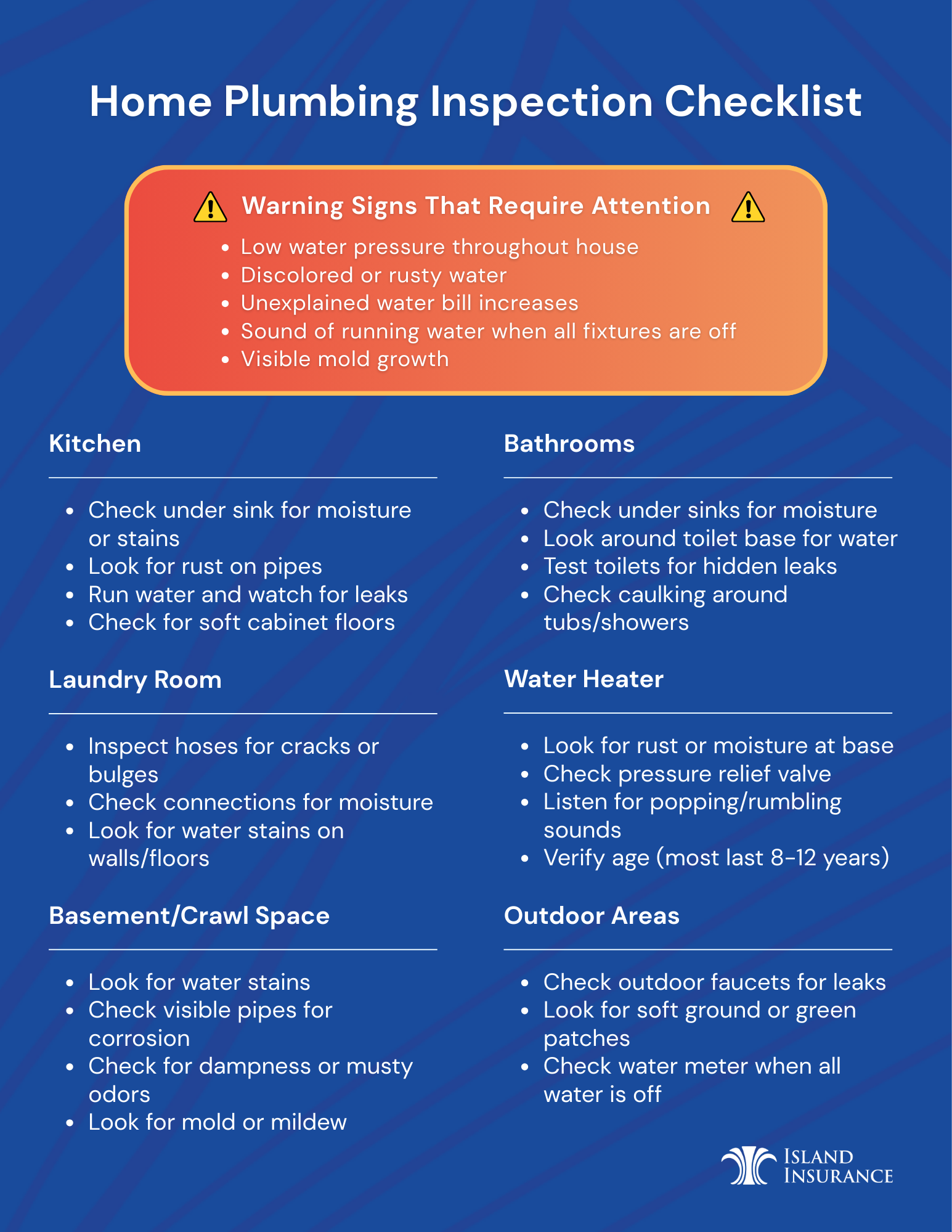
Use our inspection checklist: To make monitoring easier, download our home plumbing inspection checklist:
The Importance of Regular Inspections
For properties 30 years or older, insurance carriers often want to know:
When was the last plumbing inspection?
Who conducted it (licensed plumber)?
How frequently are inspections performed?
Did the plumber make any recommendations and if so, were they complied with?
Having licensed plumbers conduct inspections of plumbing fixtures, appliances connected to water lines, and common area drain lines can help identify potential problems before they become claims. This may include camera (scope) inspections of all main drain lines and inspection of supply lines.
Re-inspections and subsequent repairs or maintenance should typically be done at regular frequencies as recommended by your contractor.
Taking Action: A Practical Approach
If you're unsure about the condition of your plumbing, here's what you can do:
1. Schedule an inspection with a licensed plumber, especially if your property is 30 years or older or if you haven't had an inspection recently.
2. Ask specific questions about the age and condition of your pipes, water heater, and fixtures.
3. Request recommendations for preventative maintenance based on your property's specific needs.
4. Keep documentation of all work performed, including receipts from plumbing work, inspection reports, dates of major appliance replacements, and photos of updated systems.
5. Plan ahead for replacements based on the useful life of components.
Working With Your Insurance Agent
Your insurance agent may ask about:
The age of your water heater
The type of piping in your home
When your last plumbing inspection was conducted
Whether you've had any plumbing-related claims or issues
What preventative maintenance you perform
Having this information readily available can help streamline the insurance application or renewal process. If you notice any signs of leaks, document them, repair promptly, and keep records of completed work.
What Happens Without Adequate Updates?
A property that isn't adequately updated can become challenging to insure. Insurance carriers assess risk based on the likelihood of claims, and properties with aging, unmaintained plumbing systems may present a higher risk for water damage.
This doesn't mean every older home is uninsurable. Demonstrating proactive maintenance and necessary updates can help maintain your insurability and potentially your coverage options.
Final Thoughts
Think of plumbing maintenance as an investment in your property's value, longevity and your peace of mind. Regular inspections, timely updates, and good documentation can help ensure your property remains a good risk to insure and a safe, comfortable place to live.
If you have questions about what specific updates might benefit your property or how they relate to your insurance coverage, reach out to your insurance agent or a licensed plumbing contractor for guidance tailored to your situation.
Frequently Asked Questions
Water heaters generally last 5-15 years depending on quality and maintenance.
No, insurance covers sudden and accidental damage but not gradual deterioration or neglect.
Properties 30 years or older should have periodic inspections by licensed plumbers.
Copper pipes have the longest lifespan at 50+ years with proper maintenance.
Keep receipts from plumbing work, inspection reports, replacement dates, and photos of updated systems.


Related Articles